A word from FGM – January 2024
Just in time to close out 2023 in fine fashion, the Foundation of Greater Montréal announced the latest grant recipients of the Collective Fund for Social Equity (CFSE). In all, 16 organizations or associations will share a little over $2.8M between now and 2026, with a view to enhancing the vital services they offer to individuals who are asylum seekers, refugees or migrants without status or with temporary or precarious status living in the Montreal area.
As we all know, the increase in the migratory flows towards our borders creates an inordinate amount of pressure on the community sector. Frontline organizations, despite all their good faith and the tremendous efforts they make, are over-extended and cannot handle the situation alone. Our team is thus proud to recognize this crucial work and to offer financial support, but even more proud of the process we undertook − sharing power − in order to get there, while also articulating a different way for philanthropic institutions to do things. Let’s kick off 2024, then, with a glance behind the scenes at what happens when we put into practice our commitment to the community.
The CFSE’s fundamental objective is to take action on several problems that are rooted in social inequalities, so as to effect progress in the areas of justice, equity, diversity and inclusion throughout our territory. This is a vast undertaking that could be carried out in a thousand different ways, especially when you consider the multitude of needs, and the breadth of those needs, in our communities. Our first step, as we sought to determine the theme for this cycle of granting, was thus to listen to all the sectors involved, and in particular organizations working on the ground.
Trusting and sharing power
In order to maximize their impact, while simultaneously supporting the kind of lasting change our communities need, philanthropic institutions must, indeed, leave more space to their community-based partners. They must recognize and rely on the expertise and experience of those individuals and organizations who are in fact best placed to identify the needs that are the most pressing, and the opportunities that will spark the kind of change that is needed. Funders, even with the best intentions, don’t generally have either the life experience or the professional background to grasp the nuances and the complexities of the situations they wish to change. They have to be humble, and accept that it is not solely up to them to decide what communities need.
Having drawn on the collective intelligence of the community, philanthropic and institutional sectors, FGM concluded that it should focus this edition of the Fund on support for individuals who are asylum seekers, refugees or migrants without status or with temporary or precarious status. These individuals, already members of the most marginalized and vulnerable groups in our community, have seen their situation deteriorate in several ways over the last few years. Discussions with our partners also enabled us to define the criteria for, and parameters of, the funding we wanted to provide, and identify three main axes that gave a more defined structure to our undertaking: administrative or legal services for individuals; advocacy for changes in public policy; and strengthening individual and collective empowerment.
Targeted support
Why these three pillars? Among other reasons, because the organizations engaged in these vital activities often find it more difficult to get funding and maintain their activities over the long term. Some lack the necessary legal structures or administrative capacities. Others are very often ignored by funders because of the more activist nature of their work. And then there are those that have remained under the radar of the philanthropic sector, which has not invested enough time or energy in reaching out to them and discovering the major role they play in their communities.
Read the next part of this post about the vision behind the CFSE.
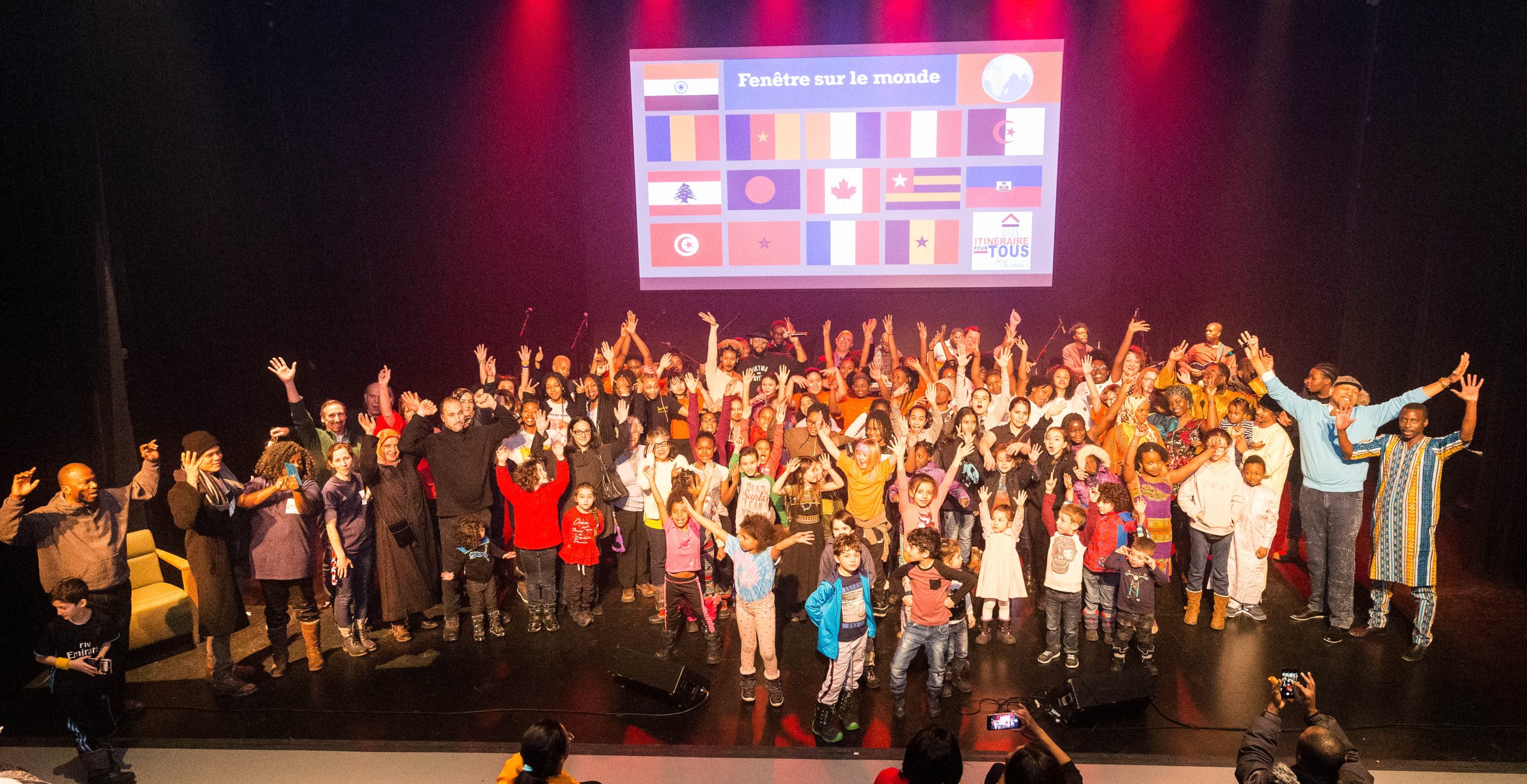
Pictured: Un itinéraire pour tous, one of the Fund’s 2024-2026 recipients. Photo credit: Vincent Marchessault.
Marie-Andrée Farmer
Director, Strategic Initiatives and Community Partnerships
Foundation of Greater Montréal
[scWrapperDark]
FGM’s Stories of the Month
January 2024
[scNewWrapperTrio ]
[scSubBlockTrio bgimg=”/wp-content/uploads/2024/01/Medecins-du-Monde-credit-Alexis-Aubin-3-crop-e1704730507788.png”]
Better serve the community through philanthropy
Keep reading this post from Marie-Andrée Farmer about the vision behind the Collective Fund for Social Equity.
Read on
[/scSubBlockTrio]
[scSubBlockTrio bgimg=”/wp-content/uploads/2021/12/Photo-mains-mot-de-la-FGM-decembre-2021.jpg”]
The Collective Fund for Social Equity
Learn more about the Fund’s orientations, its inner workings and its most recent grantees.
Read on
[/scSubBlockTrio]
[scSubBlockTrio bgimg=”/wp-content/uploads/2023/12/AGIR-scaled.jpeg”]
Thank you to all our partners!
The 2024-2026 edition of the Collective Fund for Social Equity would not have been possible without the trust and support of many individuals and organizations.
Read on
[/scSubBlockTrio]
[/scNewWrapperTrio]
[/scWrapperDark]